When the summer heat reaches its peak, your cooling system becomes the unsung hero of your home. We rely heavily on our air conditioning units to keep our living spaces comfortable, but it is easy to forget that these complex machines require consistent upkeep to function at their best.
Proper air conditioner maintenance is about much more than just occasionally swapping out a dusty filter. Over time, moisture, dust, and microscopic debris accumulate deep inside the system, hindering performance and potentially compromising your health. By incorporating regular cleaning routines into your home care schedule, you can transform your cooling experience, save money, and breathe easier.
The Core Benefits of a Clean Cooling System
Why should you prioritize cleaning the internal components of your AC? The advantages extend far beyond basic aesthetics. Here is why taking a proactive approach to your cooling system is an investment worth making.
Increasing Home Cooling Efficiency: Removing coil buildup restores fast, effective cooling and lowers energy bills.
Improving Indoor Air Quality: A clean unit stops dust mites, dander, and bacteria from cycling into your rooms.
Preventing Costly Breakdowns: Routine cleaning stops clogged coils from freezing and stressing the compressor.
Eliminating Musty Odours: Removing stagnant water and bacteria stops 'dirty sock syndrome' at the source.
When dirt and debris coat the coils, they act as an insulating barrier, forcing the system to work twice as hard. A dirty unit is also a stressed unit — restricted airflow forces the compressor to run hotter and longer, which is a primary culprit behind frozen coils and sudden mid-summer breakdowns.
Choosing the Right Cleaning Products
Understanding the different types of AC cleaners available helps you tackle the job effectively and safely.
Coil Cleaners: Break down baked-on grime on heat exchange coils, in liquid or aerosol form.
Foaming Sprays: Expand into tight fins to lift hidden dirt liquid sprays miss.
Evaporator Specifics: Gentler, dedicated formulas safe for indoor coils.
No-Rinse Options: Spray on and run the unit — condensation washes dirt out through the drain.
Eco-Friendly Choices: Biodegradable ingredients, safe for homes with pets or kids.
All-in-One Kits: Everything needed for smaller window units in one box.
Your DIY Evaporator Coil Maintenance Guide
Ready to roll up your sleeves? Performing your own AC maintenance is highly rewarding. Here's a comprehensive guide to help you clean your indoor system safely and effectively.
Step 1: Safety First: Turn off power at the breaker box before touching the unit.
Step 2: Clean the Filters: Unclip mesh filters, wash with warm water and mild soap, dry fully before reinstalling.
Step 3: Tackle the Coils: Brush loose dust parallel to the fins, then apply coil cleaner and rinse if required.
Step 4: Straighten the Fins: Use a fin comb to gently fix bent aluminium fins and restore airflow.
While inspecting the unit, you might notice some of the thin aluminium fins are crushed or bent, restricting airflow. Using a condenser fin comb tool, gently glide the teeth through the bent fins to straighten them out — a small step that makes a massive difference in airflow efficiency.
Combating Mould and Disinfecting Air Vents
Because air conditioners naturally produce condensation, the dark, damp interior of your unit is a prime breeding ground for microbial growth. If you spot black or green spots near the drip pan or blower wheel, look for an EPA-registered HVAC maintenance spray designed specifically to kill mould and mildew, and ensure your condensate drain line is clear.
When wrapping up your routine, remove the vent covers, wash them in warm soapy water, and use a vacuum with a hose attachment to clear dust from the duct openings. Wipe the inside edges of the ductwork with a microfiber cloth lightly dampened with a non-toxic botanical disinfectant before replacing the covers.
Scheduling Your Cleaning Routine
A common question homeowners ask is how often to sanitize indoor AC units. The frequency depends heavily on your lifestyle and climate:
Monthly: Check and clean the basic mesh filters.
Bi-Annually (Spring & Fall): Deep clean the indoor evaporator coils and clear the condensate drain line.
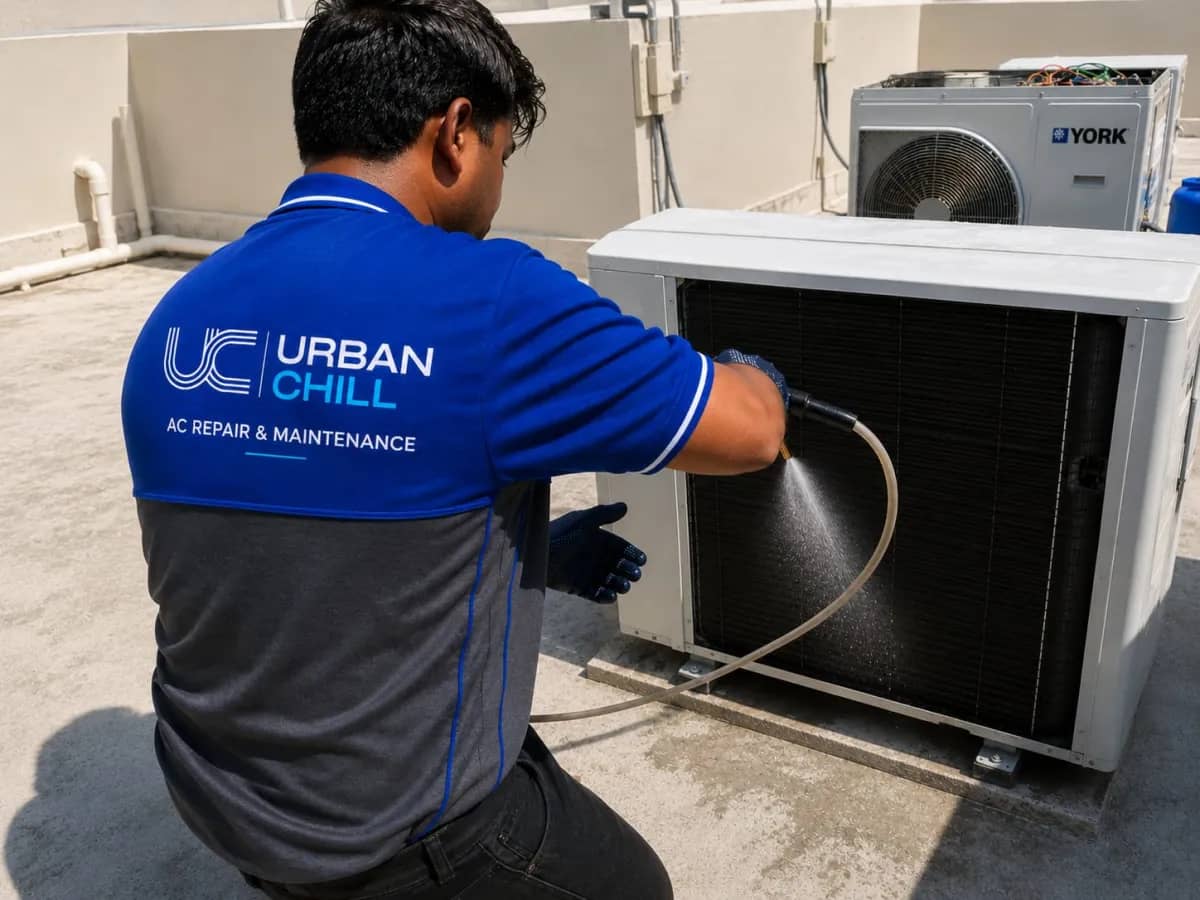
Annually: Clean the outdoor condenser unit — leaves, dirt, and coil buildup.
Staying on top of this schedule means your system will rarely reach the point of severe grime buildup, making each cleaning session faster and easier.
Making the Choice: DIY vs Professional HVAC Maintenance
While keeping your system clean is highly accessible for the average homeowner, it is important to know your limits. Understanding the line between DIY and professional HVAC maintenance ensures your system stays safe.
When to DIY
- Washing or replacing reusable filters
- Applying a no-rinse coil foam to accessible indoor units
- Clearing minor debris from the outdoor condenser
- Straightening bent fins with a fin comb
When to Call a Professional
- Low refrigerant or ice on coils after cleaning
- Deep ductwork sanitation
- Electrical issues — screeching motors, tripped breakers
- Severe mould infestations in ductwork insulation
A good rule of thumb is to handle routine surface and coil cleaning yourself using a reliable AC cleaner, but schedule a professional inspection once a year to check the electrical components, moving parts, and refrigerant levels.
Conclusion: A Cleaner AC for a Cooler Home
Your air conditioner is a significant investment in your home's comfort. From increased energy efficiency to the peace of mind that comes with breathing purified air, the benefits of routine cleaning are undeniable. Mark your calendar for seasonal maintenance and enjoy a cooler, cleaner, and healthier home all summer long.